Fresha vs Square vs a Custom Clinic System: Which Workflow Fits?
Compare Fresha, Square, and custom medspa software with a 100-point workflow score, current US pricing, data checks, and a practical demo plan.
Reviewed by Abdullah Wasim. Our team checked current US Fresha pricing, marketplace, booking, reporting, and data-connector documentation; current US Square Appointments pricing, booking, API, export, HIPAA, and Business Associate Agreement documentation; and HHS software-vendor guidance on August 12, 2026. Search results were used to confirm comparison intent. Vendor claims are labeled and linked to first-party pages. Competitor comparison pages were not used as independent evidence.
The 100-point Clinic Workflow Fit Score and 40-control downloadable demo worksheet are original editorial tools. We did not open vendor accounts, process transactions, test either product, review a clinic contract, inspect a security program, or build a custom clinic system for this comparison. AI-assisted research organization and drafting supported the process; sources, arithmetic, code, and final wording were reviewed before publication.
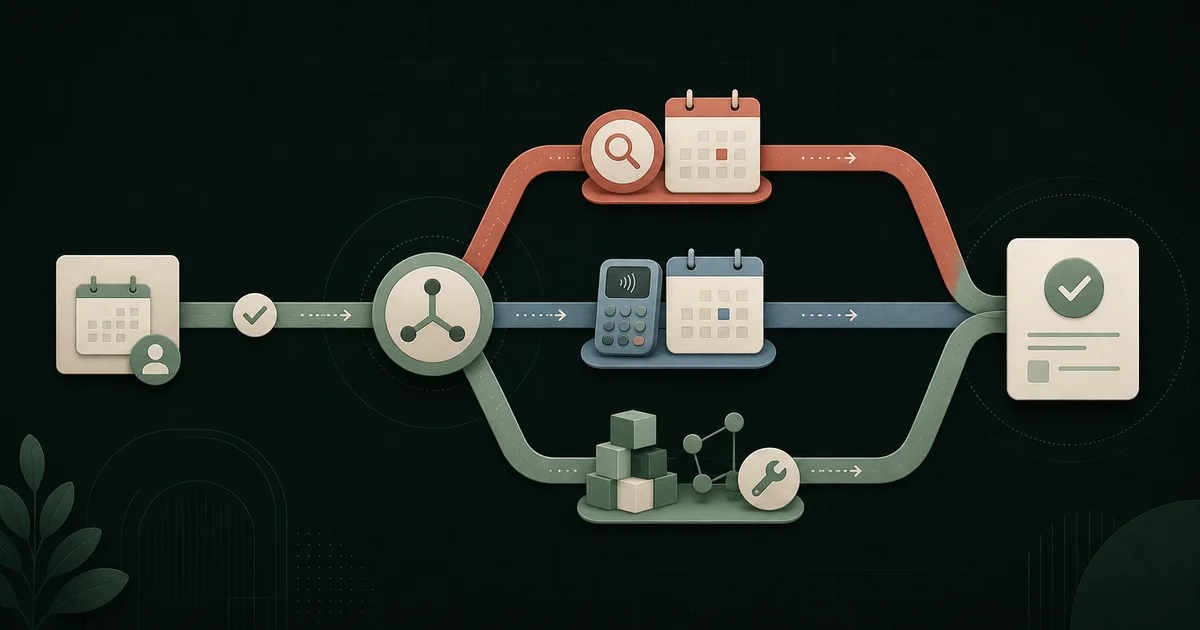
The featured artwork was generated for TheClinify with OpenAI ImageGen. It contains no vendor interface, logo, clinic, or patient asset. This article is not clinical, legal, privacy, security, tax, payments, or compliance advice. No vendor or custom build can guarantee fit, compliance, uptime, accessibility, bookings, or revenue.
- Fresha is the clearest first test for a clinic that wants beauty and wellness operations plus marketplace discovery in one packaged model.
- Square is the clearest first test when the clinic already wants Square payments, customer records, appointments, and documented API options in the same ecosystem.
- Custom software is not the automatic premium choice; it earns a place only when a valuable requirement fails in packaged products and has a funded owner.
- Score one sanitized appointment from the public website through booking, exception handling, checkout, reporting, export, and offboarding before signing.
Should a medspa choose Fresha, Square, or custom software?
For a Fresha vs Square medspa decision, start with the operating model. Fresha fits clinics that want a beauty and wellness platform with scheduling, point of sale, client management, forms, inventory, memberships, marketing, and marketplace discovery. Square fits clinics that want appointments connected to Square payments, customer records, commerce, and a documented developer platform. Custom software fits only when a written workflow cannot pass in either product and the clinic can own the build after launch.
There is no universal winner. A two-provider clinic that values marketplace acquisition may accept Fresha's model. A clinic already reconciling sales in Square may reduce duplicate work by keeping appointments there. A multi-step consultation, supervision, inventory, or reporting process might justify a custom layer, but only after the requirement is narrow enough to test.
This article compares the three operating paths. Use the broader medical aesthetics software buying guide for a seven-part vendor evaluation and the booking software comparison for five current scheduling platforms.
How do the three software paths compare at a glance?
Fresha and Square are configurable products. A custom system is a scoped software project, not another subscription tier. Compare all three against the same appointment, data, reporting, and exit requirements rather than treating custom as a feature-complete blank check.
| Decision area | Fresha | Square Appointments | Custom clinic system |
|---|---|---|---|
| Best first test | Beauty and wellness operations with marketplace discovery. | Appointments inside a Square-centered payment and commerce stack. | A narrow clinic workflow that packaged products cannot pass. |
| Starting model | Independent, per-bookable-member Team, and custom Enterprise plans. | Free, Plus, Premium, and sales-led options shown on the US plan page. | Discovery, requirements, build, testing, launch, and maintenance. |
| Public booking | Direct links, social and Google channels, and Fresha Marketplace listing. | Booking site, button, URL, embed, and advanced service or staff widgets. | Designed to scope, or connected to an existing scheduler. |
| Acquisition model | Fresha Marketplace can introduce new clients for a one-time fee. | Square Go and social or Google booking channels are available in supported setups. | No audience exists by default; the clinic must fund discovery and demand. |
| Integration evidence | Report exports plus a paid Snowflake-based data connector for analytics. | Documented Bookings and related APIs, app marketplace, and CSV appointment export. | Only the integrations, logs, and ownership included in the written scope. |
| Main risk | Accepting the marketplace, fee, data, and channel rules without modeling them. | Assuming every ecosystem feature, API permission, or HIPAA configuration applies. | Building a broad replacement before proving one valuable requirement. |
When is Fresha the better fit?
Fresha is the stronger first demo when the clinic wants a packaged beauty and wellness operating model and sees value in marketplace discovery. Its current US pricing page lists scheduling, point of sale, client management, consultation forms, retail and inventory, reporting, marketing, gift cards, packages, memberships, team tools, and booking channels in the product comparison. That is broad coverage, not proof that every medspa workflow will fit.
The same pricing page currently lists Independent at $19.95 per month and Team at $14.95 per bookable team member per month. It also lists payment fees, communication allowances, and separately priced add-ons. Verify the localized page and configured quote on signing day because rates and regional terms can change.
Marketplace economics need their own decision. Fresha says its one-time new-client fee applies when a new customer first discovers the business through Fresha and completes an online booking. Returning clients do not incur that fee. Its marketplace fee guide also explains attribution, cancellations, fee timing, and the relationship between marketplace listing and online booking channels. Model that path with the clinic's own appointment values and acquisition mix.
When is Square Appointments the better fit?
Square is the stronger first demo when appointments should share a payment, customer, catalog, location, and commerce ecosystem. Its current US Appointments plan page lists unlimited calendars, online booking, prepayments, deposits, multi-staff bookings, multi-location controls, waitlists, resources, reminders, payments, reporting, and broader Square business capabilities by plan. Confirm each required row in the actual account configuration.
Square's online booking guide documents a booking site, direct URL, button, embed code, full website, and advanced widgets filtered by service or staff. That makes Square practical when a clinic wants its public service page to hand off to a specific bookable path without replacing the whole website.
The developer boundary is clearer than a generic claim that an API exists. Square's Bookings API documentation covers retrieving bookings, searching service, staff, and location availability, and maintaining bookings. Seller-level write operations require a paid Appointments plan and the correct permissions. The docs also identify related Locations, Team, Customers, and Catalog APIs. Price the integration, permissions, monitoring, and support work separately from the plan.
When does custom clinic software earn a place?
Custom software earns a place when a specific, valuable workflow cannot pass in a packaged product without recurring manual repair. Examples could include an approval sequence across roles, a specialized inventory event, a multi-system patient handoff, or an owner report that depends on defined data from several tools. The requirement must be testable. "More control" is not a requirement.
Start with the smallest custom boundary. A clinic may keep Fresha or Square for booking and payments while adding a staff workflow, reporting layer, or portal. Replacing scheduling, payments, clinical records, messaging, inventory, and reporting at once multiplies migration, security, testing, support, and continuity risk.
The TheClinify Portal is discovery-priced because modules, users, integrations, data responsibilities, and support needs vary. It is not included in the $2,499 setup plus $499 per month managed website offer. Before requesting custom software, turn the need into pass or fail controls with the aesthetic clinic software requirements checklist.
Which option handles the website-to-booking handoff best?
The best handoff is the one that preserves service, location, provider, and consultation context without collecting inappropriate information in the public marketing layer. Fresha offers direct booking and marketplace channels. Square documents booking URLs, buttons, embeds, and filtered widgets. A custom system can create another path, but it also creates another interface to own and test.
Begin the demo on the clinic's service page. Check the action on a phone, select the intended appointment, trigger a deposit or policy if required, complete only the approved fields, receive the confirmation, and locate the result in the staff view. Then reschedule or cancel it. A dashboard tour that begins after the appointment already exists skips the most failure-prone handoff.
Keep the public growth layer distinct from operations. The medical aesthetics software landing page explains that boundary, while TheClinify's booking integration service connects supported links, embeds, and forms without claiming to replace the clinic's record system.
How should a clinic compare the full 12-month cost?
Normalize the same 12-month window: subscription, bookable members or locations, payment processing, hardware, marketplace fees, messages, add-ons, migration, training, integration work, staff time, double-running, support, and exit. Base subscription arithmetic is only the first line.
For illustration, four bookable Fresha Team members at the current listed US base rate equal $14.95 x 4 x 12, or $717.60 for 12 months. One Square Plus location at the currently listed $49 monthly rate equals $588 for 12 months. Neither figure includes processing, hardware, add-ons, marketplace fees, implementation, or internal labor, so they are not total costs or quotes. A custom system has no responsible generic estimate without requirements.
Keep payment fees separate because volume and transaction method change the result. Fresha and Square both publish current processing schedules on their plan pages. Calculate with the clinic's in-person, online, stored-card, refund, chargeback, and hardware assumptions. Ask how a price change is communicated and which rate the signed agreement controls.
| Cost line | Fresha check | Square check | Custom check |
|---|---|---|---|
| Base unit | Independent or each bookable member; enterprise terms if relevant. | Plan and each active location under the current model. | Users, environments, modules, support, and hosting. |
| Variable cost | Payments, communications, marketplace clients, and add-ons. | Payments, messages, gift-card loads, hardware, and add-ons. | Usage services, vendors, incidents, changes, and support. |
| Implementation | Import, setup, configuration, training, and double-running. | Catalog, staff, booking, payments, hardware, migration, and training. | Discovery, design, development, testing, migration, and launch. |
| Exit | Exports, connector needs, account closure, and channel effects. | CSV and API retrieval, account effects, and handoff work. | Repository, infrastructure, documentation, data export, and transition support. |
What must a medspa verify about health data and agreements?
Do not turn a vendor's compliance language into a clinic-wide conclusion. HHS says a software vendor that hosts or accesses protected health information for a covered entity can be a business associate, while merely selling software without that access does not create the relationship. Its software-vendor guidance says the required agreement must be in place before that vendor access.
Square tells sellers to determine whether they are subject to HIPAA and whether they will use Square services with PHI. Square's current HIPAA support page points covered users to its BAA. The March 16, 2026 BAA says applicability depends on the service and configuration, names Appointments among potentially HIPAA-enabled services, and excludes Square Buyer Services from its BAA scope. Review the exact planned path with qualified advisers.
Fresha markets a medspa product, but this review did not locate a public US BAA that could be verified for the proposed workflow. Do not infer absence or coverage from that search. Ask Fresha directly for the governing agreement, covered services, configurations, data roles, subprocessors, access controls, audit records, incident terms, retention, and deletion. Apply the same written questions to a custom provider and every infrastructure subcontractor.
Which path offers better integrations, reporting, and exit evidence?
Square offers the clearest public developer trail of the three paths. Its Bookings API documents permissions and operations, and its appointment settings guide explains how to export appointment history as CSV. Public documentation still does not prove that every field, record, image, note, or dependency required by the clinic will export. Test a representative sample.
Fresha documents PDF, CSV, and XLSX report exports. It also offers a paid data connector that provides raw Fresha data through Snowflake for supported analytics connections. Reporting access is not the same as operational write access or a complete migration export, so label the exact purpose of each connection.
A custom system can expose the exact events and reports in scope, but only if the contract includes them. Require data definitions, logging, interface ownership, failure alerts, retry behavior, versioning, documentation, test environments, export format, deletion, repository or source access, and offboarding assistance. Custom without an exit plan can create more lock-in than packaged software.
How does the 100-point Clinic Workflow Fit Score work?
Give points only for evidence in the proposed plan, configuration, agreement, or acceptance test. Divide each area into controls, score each control pass or fail, and total the earned weight. A roadmap promise gets zero. Stop even with a high score when a critical data agreement, role permission, export, payment reconciliation, or continuity control fails.
The weights are an original starting model, not an industry benchmark or certification. Change them before demos if the clinic can explain the operating reason. Do not change them after seeing which vendor wins. Download the original 40-control software demo worksheet to record owners, evidence, results, blockers, and follow-up.
| Score area | Weight | Evidence required before points |
|---|---|---|
| Core appointment and exceptions | 20 | A service-page booking, correct resources, confirmation, reschedule, cancellation, no-show, and failure path. |
| Clinical and documentation boundary | 15 | Approved data placement, roles, reviews, signatures, records, and system-of-record decisions. |
| Privacy, security, and agreements | 15 | Entity analysis, service scope, agreements, permissions, audit trail, incidents, retention, and subprocessors. |
| Payments and reconciliation | 10 | Deposits, checkout, refunds, stored cards, payouts, fees, chargebacks, and finance-owner report. |
| Public booking and acquisition | 10 | Mobile path, source context, channel economics, accessibility test, and fallback. |
| Integrations and reporting | 10 | Documented method, permissions, owner, monitoring, errors, definitions, and owner-readable output. |
| Migration, export, and exit | 10 | Sample import, opened export, history coverage, transition terms, deletion, and continuity. |
| Operating ownership and full cost | 10 | 12-month total, implementation owner, training, support, changes, and maintenance capacity. |
What should every finalist demonstrate?
Send the same sanitized script before every demo. Use a realistic consultation or service, but no real patient data. Include the owner, front desk, one provider, and the person responsible for privacy or security when that role exists. Each person should score independently before the group discusses the result.
- Start on the public service page and reach the correct service, location, provider type, and booking rule on a phone-sized screen.
- Create the appointment, apply the deposit or policy, send the expected confirmation, and locate the result in the staff calendar.
- Run a reschedule, cancellation, no-show, failed payment or failed integration, and a staff correction.
- Complete the approved documentation boundary and show which roles can view, edit, approve, export, and delete each data type.
- Reconcile the appointment, payment, refund, fee, payout, package, or membership in the owner report.
- Export a representative sample, open it outside the product, and identify every field or attachment that does not move.
- Show support escalation, service status, incident communication, access removal, and the offboarding sequence.
Can a clinic use a hybrid path?
Yes. A hybrid is often the most disciplined result. Keep Fresha or Square for the jobs it already performs, keep the public website responsible for discovery and service education, and build only the missing operational layer. This preserves mature payment or booking infrastructure while limiting the custom surface.
A hybrid still needs one source of truth per event. Name which system owns the patient or client profile, appointment, service catalog, payment, clinical record, inventory item, consent, message, and report. Then define which direction data moves, how duplicates are resolved, and who responds when the connection fails.
If inventory is the deciding workflow, use the medical aesthetics inventory guide. If authenticated access or messaging drives the scope, use the medspa patient portal guide. Those focused tests are more useful than asking a custom project to solve every future idea.
What is the final decision rule?
Choose Fresha when its packaged workflow and marketplace model pass the clinic's test. Choose Square when its payment-centered ecosystem and documented booking or integration paths reduce real handoffs. Choose custom only when a specific requirement fails in both, creates enough operational value to fund, and has a named owner for launch, security, support, changes, and exit.
Do not let the highest feature count decide. Run one appointment, one exception, one payment, one report, one export, and one offboarding conversation. The option that passes those controls with the fewest unsupported assumptions is the better fit today.
FAQ
Is Fresha or Square better for a medspa?
Fresha is the better first test when beauty and wellness operations plus marketplace discovery matter. Square is the better first test when the clinic wants appointments inside a Square-centered payment and commerce stack. Neither is automatically right for clinical documentation, data agreements, or specialized workflows.
Can a medspa use Fresha or Square with its existing website?
Yes, subject to the configured product and channel rules. Fresha offers direct booking links and online channels. Square documents booking URLs, buttons, embeds, and filtered widgets. Test whether the handoff preserves the correct service, location, provider, consultation rule, and fallback on mobile.
Does Square Appointments support HIPAA compliance?
Square publishes a BAA and names Appointments among services that may be HIPAA-enabled, but its March 2026 agreement says coverage depends on the service and configuration and excludes Square Buyer Services. The clinic must assess its own status, planned data, configuration, vendors, and agreement with qualified advisers.
When should a medspa build custom clinic software?
Build custom software after a narrow, high-value requirement fails in packaged tools and the clinic has approved discovery, data responsibilities, acceptance tests, maintenance, support, and exit. Keep existing booking or payment infrastructure when it works. Custom clinic software pricing requires discovery; TheClinify does not publish a generic Portal price.
Do your requirements point beyond packaged software?
Bring the workflow, current tools, data boundary, user roles, and must-have reports. We will separate what belongs in the website, an existing platform, or a custom Portal scope.
Request a Portal discovery call