Best Booking Software for Medical Aesthetic Practices
Compare five medical aesthetics booking platforms by workflow, pricing, scheduling rules, data handling, implementation, and website fit in 2026 for US clinics.
Editorial method: Our team analyzed 18 official vendor, regulator, and standards pages on July 24, 2026. We built this comparison around documented workflow evidence. From our research, we report only capabilities and prices supported by a linked source. We did not conduct hands-on product tests. Vendor details can change. This is not legal, security, compliance, or clinical advice.
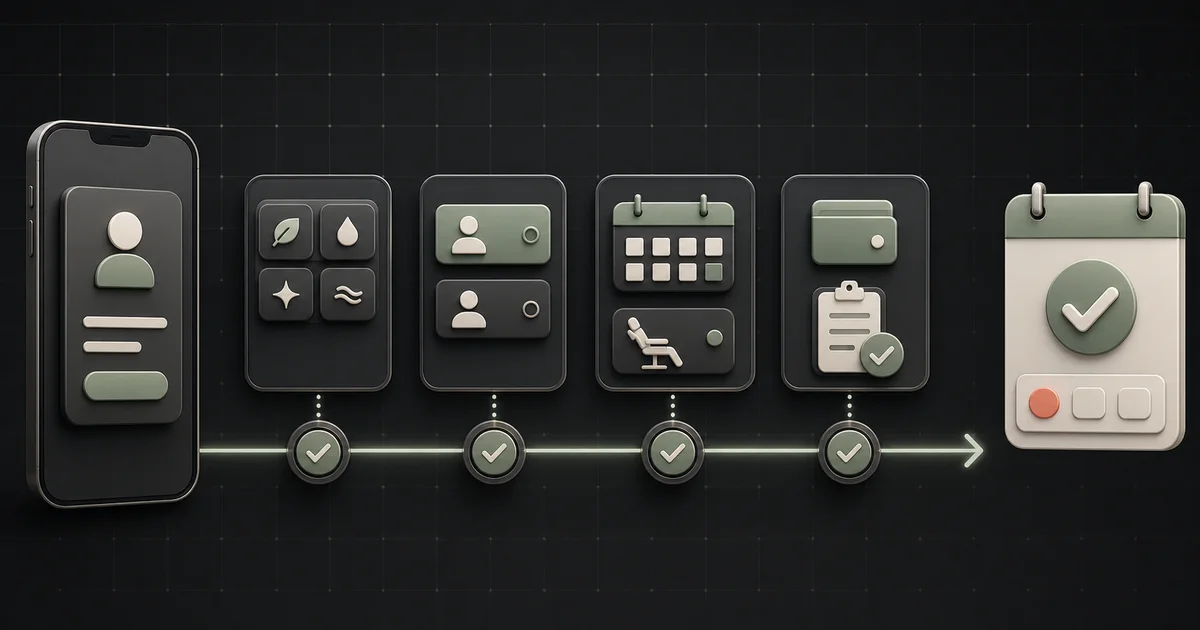
- Choose by workflow fit, not the longest feature list.
- Make every finalist prove one identical appointment from website click to confirmation.
- Score booking rules, patient experience, staff handoffs, data, implementation, and full cost.
- Verify prices, plan limits, agreements, integrations, and exports in writing before signing.
Which booking software is best for a medical aesthetic practice?
There is no universal winner. Aesthetic Record is a strong first look for an aesthetics-specific booking and clinical stack with published per-user pricing. Boulevard suits clinics prioritizing configurable services and a guided patient booking path. PatientNow fits practices evaluating booking alongside EMR and growth tools. Vagaro offers a lower published entry price and modular add-ons. Zenoti is built around more complex, resource-heavy or multi-location operations.
Those are shortlist signals, not performance rankings. The best booking software for a medical aesthetic practice is the product that can complete the clinic's real appointment path. It must connect the service page, correct provider, room or device, intake step, deposit, confirmation, staff view, and usable report. If you are deciding which system should own the wider operation, start with the medical aesthetics software buying guide.
This comparison uses official vendor documentation, not affiliate commissions, user reviews, or hands-on testing. Prices and capabilities were checked July 24, 2026; the editorial policy explains how TheClinify handles changeable claims. Request a current written quote and make the vendor demonstrate the proposed plan before treating any row as a purchase decision.
| Platform | Best shortlist signal | Pricing signal | Prove in the demo |
|---|---|---|---|
| Aesthetic Record | Aesthetics-specific booking connected to charting, photos, inventory, and patient tools. | Published per-user plans plus a startup fee. | Provider, service, room or equipment, deposit, and consult rules on the proposed tier. |
| Boulevard | Configurable service timing and a medspa bundle within a client-experience platform. | Agreement-based pricing for current medspa bundles. | Role-specific duration, resource use, injectable checkout, and included add-ons. |
| PatientNow | Booking evaluated with EMR, practice management, payments, memberships, and marketing. | Quote-based with optional add-ons. | The handoff among website booking, scheduling, records, deposits, and reporting. |
| Vagaro | Lower published starting price and modular tools for a simpler clinic or wellness workflow. | Published base plan, extra calendars, and paid features. | Exact calendars, forms, messages, integrations, data terms, and configured price. |
| Zenoti | Multi-location scheduling with provider, room, equipment, and consultation-first complexity. | Customized quote with some usage charges. | Location rules, series, resources, permissions, migration, support, and rollout ownership. |
How does the 100-point Booking Workflow Fit Scorecard work?
Score each finalist from 1 to 5 in the six areas below. Convert a rating to weighted points with this formula: rating divided by 5, multiplied by the category weight. A product rated 4 in a 30-point category earns 24 points. Score only what the vendor demonstrates in the proposed plan and confirms in writing.
This is TheClinify's original decision framework, not an industry benchmark. Change a weight only when the clinic documents the reason before demos begin. A failed launch blocker should disqualify a platform even if its total is high. A roadmap promise receives zero until the capability is live, included, and priced.
- Disqualify a platform that cannot prevent a critical provider, room, or device conflict required by the workflow.
- Disqualify a vendor that will handle PHI for a covered workflow but will not provide the required written agreement.
- Disqualify a platform that cannot provide a usable export of records the clinic must retain.
- Keep anything marked "available soon" or "customizable" unscored until the vendor proves the exact behavior.
| Scorecard category | Weight | Evidence required for a top score |
|---|---|---|
| Appointment rule fit | 30 points | Correct service, provider, location, duration, buffer, room or device, prerequisite, and exception behavior. |
| Patient booking experience | 20 points | Clear mobile service choice, availability, deposit, forms, confirmation, rescheduling, waitlist, and error recovery. |
| Staff and operating handoff | 15 points | Front desk and providers complete the normal path and key exceptions without duplicate work. |
| Data, privacy, and security fit | 15 points | Written data map, agreement answers, role controls, audit history, backup, incident, export, and deletion terms. |
| Website and measurement fit | 10 points | Service-specific links, stable handoff, approved analytics, source reporting, and an owner for failures. |
| Implementation and full cost | 10 points | Full first-year quote, migration scope, training, support, acceptance test, and exit plan. |
What is the one-appointment integrity test?
Give every vendor the same sanitized appointment script. Begin on the clinic website, not inside the vendor dashboard. Use a path with enough complexity to matter. For example, test a new patient who must choose a consultation before treatment, needs a specific provider type and room, pays a deposit, completes the approved intake step, and receives the correct confirmation.
Then run one exception: reschedule, waitlist, provider absence, failed deposit, or staff override. Record the screens, duplicate entry, manual work, plan limitation, and unresolved question. A prepared feature tour cannot replace this test.
- Open the service page on a phone-sized screen and follow its primary booking action.
- Preserve the service, location, and appointment type without making the patient start over.
- Apply provider, room or equipment, duration, buffer, prerequisite, and availability rules.
- Collect only information appropriate for that point in the patient journey.
- Show deposit, cancellation, confirmation, reminder, change, and failure behavior.
- Find the appointment, source, status, and next owner in the staff view and an owner-readable report.
- Export a sanitized sample and identify who owns any broken handoff.
When should Aesthetic Record make the shortlist?
Aesthetic Record deserves a first look when a clinic wants scheduling inside an aesthetics-specific platform. Its current pricing page lists Essentials at $15 per user per month plus a $399 startup and onboarding fee, and Accelerator at $19 per user per month plus the same stated fee. The page groups online booking with charting, patient photos, inventory, point of sale, ecommerce, memberships, and patient tools; some capabilities have separate costs or allowances.
The vendor's Smart Scheduling documentation describes real-time availability for providers, rooms, and devices, along with buffers, waitlists, and double-booking controls. Its online booking page also describes provider-service combinations, deposits, abandoned-booking lead capture, ecommerce, and Google Analytics 4 support. In the demo, confirm which tier includes each rule, what counts against allowances, and how the clinic's export opens outside the system.
When should Boulevard make the shortlist?
Boulevard is worth evaluating when the clinic values a guided booking experience and needs services to behave differently by role or staff member. Its service customization guide documents controls for online bookability, price, duration, processing time, finishing time, and transition time. Its product-use guide describes tracking units used during a service and charging for injectable products.
Current Boulevard billing documentation says medspa customers use Aesthetics Starter Bundle, Aesthetics Bundle, or Enterprise configurations, with pricing defined in the agreement. A bundle may include the Medspa add-on while setup, migration, add-ons, and text usage can appear separately. Ask for one quote covering the exact bundle, locations, staff, messages, forms, integrations, and any ePrescribe charges.
When should PatientNow make the shortlist?
PatientNow belongs on the list when the clinic wants to evaluate booking as part of a wider medspa system. Its medspa platform page describes scheduling alongside EMR, payments, memberships, marketing, patient photos, and reporting. Its online booking page describes real-time availability, reminders, waitlists, deposits, and booking paths from a website or Google.
For resource-heavy clinics, PatientNow's practice management page says its conflict checker can reserve rooms, equipment, and other resources as well as provider schedules. The pricing page separates Essentials and Pro, offers optional add-ons, and directs buyers to a tailored quote. Ask for an end-to-end demonstration across every module in that quote, including what happens when an integration fails.
When should Vagaro make the shortlist?
Vagaro is a practical comparison point for clinics that want a lower published starting price and modular business tools. Its US plans and pricing guide, updated July 15, 2026, lists a limited-time base price of $23.99 per month for one calendar and $10 per added calendar up to seven. It also lists separate prices for features such as forms, APIs and webhooks, an online shopping cart, and electronic prescribing.
The platform materials describe online booking, a booking widget, calendar and resource management, waitlists, memberships, packages, gift certificates, reminders, and inventory. Do not compare the base price with an inclusive vendor quote. Price the required calendars, forms, messages, payment costs, integrations, ecommerce, onboarding, and prescribing roles. For sensitive data, get written answers on agreements, permissions, audit history, retention, exports, and support.
When should Zenoti make the shortlist?
Zenoti merits evaluation for multi-location groups or clinics with complex provider and resource rules. Its medspa appointment booking page describes provider-specific rules, consultation-first flows, series scheduling, forms, reminders, and booking across providers and locations. The vendor's appointment book documentation includes an equipment view for equipment-based appointments.
Zenoti's current plan page uses customized pricing. It lists appointment, employee, inventory, resource and room, online booking, webstore, social booking, and Reserve with Google capabilities, and notes that communication usage can affect charges. Ask it to prove location rules, shared resources, permissions, migration, training, and owner reporting. Treat vendor statements about legal or clinical workflow as product descriptions; verify the clinic's duties with qualified advisers.
How should you compare the full first-year price?
Normalize every quote into the same 12-month worksheet. A low entry price may exclude forms, messages, calendars, migration, marketing, integrations, or support. A higher bundle may include tools the clinic pays for elsewhere. Neither is cheaper until the scope and billing unit match.
Ask whether the subscription is priced per user, provider, calendar, prescriber, location, account, message, transaction, or stored item. Separate payment processing because its cost changes with method and volume. Keep temporary double-running and staff training time visible.
| Cost line | Question to put in writing | Evidence to collect |
|---|---|---|
| Base and billing unit | Which tier, roles, calendars, providers, and locations does this quote cover? | Order form and current plan comparison. |
| Setup and migration | Which records, photos, balances, packages, appointments, fields, and history will move? | Migration scope and sample import result. |
| Add-ons and usage | Which forms, messages, storage, reports, APIs, AI, ecommerce, or prescribing features cost more? | Configured feature list, limits, and overage rates. |
| Payments and hardware | Which rates, devices, payout terms, replacements, and chargeback costs apply? | Payment schedule and hardware terms. |
| Training and support | Who configures, trains each role, and owns an escalation? | Implementation plan, support hours, response terms, and owners. |
| Exit | What export, read-only period, assistance, deletion schedule, and termination fee apply? | Opened export sample and contract language. |
What should you verify about health data and accessibility?
Do not buy a platform because its marketing uses a compliance label. First determine which entity, data, transaction, and vendor relationship are in scope. HHS explains that a business associate may create, receive, maintain, or transmit protected health information for a covered entity, and written contracts must establish permitted uses, safeguards, incident reporting, subcontractor duties, and termination handling. Review the HHS business associate guidance with qualified counsel.
Security is an operating program, not a contract line. HHS says the Security Rule requires appropriate administrative, physical, and technical safeguards for electronic protected health information. Use its Security Rule overview to frame questions about access, audit history, backups, incidents, retention, subcontractors, and offboarding. Verify the clinic's own obligations rather than assuming the vendor carries them.
Test the public booking path with a keyboard, screen reader, zoom, and a phone-sized screen. WCAG 2.2 is a current technical standard for content people can perceive, operate, and understand across compatible tools. Its success criteria address keyboard operation, visible focus, labels, error identification, target size, and accessible authentication. Demonstrated behavior is stronger evidence than a generic accessibility statement.
How should the clinic website connect to booking software?
The website should own discovery, service explanation, trust, and context for the next action. The booking system should own the approved scheduling workflow after the handoff. That boundary becomes important when a service requires a consultation, only certain providers or locations, a device, a deposit, or staff review.
Use a service-specific link when the scheduler can preserve the intended appointment. Use consult routing when a visitor should not select a treatment directly. Keep clinical details out of marketing analytics. The booking integration service explains how TheClinify connects an existing scheduler without claiming to replace the clinic's record system.
Assign one owner to changed service IDs, provider changes, embeds, tracking, outages, and fallbacks. Recheck the handoff after every important website or scheduler change. The cloud software versus website infrastructure guide maps the wider boundary, while the software requirements checklist turns it into pass or fail requirements.
- Keep the service name and appointment label understandable and consistent across both systems.
- Preserve location and appointment context without placing health details in analytics URLs or events.
- Provide a visible alternative when the booking system is unavailable or a patient needs help.
- Test mobile layout, keyboard access, focus, errors, confirmation, and back-navigation.
- Measure a completed booking only when the approved setup can do so accurately.
How do you choose a shortlist without buying a feature list?
Choose no more than three finalists after requirements are written. Send the same one-appointment integrity test and scorecard before each demo. Require the configured price, implementation scope, data answers, agreement terms, export sample, and unresolved items in writing. Let the owner, front desk, a provider, and the privacy or security owner score independently before discussing the result.
Select the highest-scoring product only after every blocker is cleared and accepted compromises are recorded. Keep the script as a pre-launch acceptance test. If no standard platform can prove the workflow, narrow the custom requirement before requesting a Portal discovery conversation. TheClinify's clinic software is discovery-priced because modules, users, integrations, and data responsibilities vary.
If the platform is already chosen and the remaining problem is the public journey, review transparent website pricing or request the Portal discovery call below. TheClinify's managed custom clinic websites are $2,499 to set up plus $499 per month. That offer covers the managed website layer; it is not a substitute for booking or clinical software.
FAQ
What is the best booking software for a small medspa?
There is no automatic winner. Compare Aesthetic Record when an aesthetics-specific clinical stack matters and Vagaro when a lower published entry price and modular tools fit. Also test Boulevard, PatientNow, or Zenoti when their workflow depth matches the clinic. Use the same appointment script and full-cost quote for every finalist.
Can medical aesthetics booking software prevent room or device conflicts?
Some platforms document provider, room, resource, or equipment scheduling, including Aesthetic Record, PatientNow, and Zenoti. Do not rely on the feature name. Demonstrate the exact provider, location, room, device, duration, buffer, and staff override rules on the proposed plan.
How much does medical aesthetics booking software cost?
Pricing units differ. Aesthetic Record and Vagaro publish starting prices, while current Boulevard medspa bundles, PatientNow, and Zenoti use quote-based pricing or agreement terms. Compare a full 12-month scope including users or calendars, locations, setup, migration, add-ons, messages, payments, hardware, training, integrations, and exit costs.
Does booking software replace a medical aesthetics website?
No. Booking software can own availability, appointment rules, deposits, confirmations, and staff scheduling. The website should still explain services, build trust, earn search visibility, route patients to the right next step, and provide a usable fallback. The handoff between the two systems must be tested and maintained.
Should patients book every aesthetic treatment online?
Not necessarily. The clinic should decide which services may be self-booked, which require a consultation, and which need staff review based on its services, policies, and qualified clinical or legal guidance. The booking system should enforce that approved routing without giving clinical advice.
Need a booking workflow your website can support?
Bring your shortlist and one real appointment path. We can map the website handoff, booking rules, and whether a custom Portal belongs in the stack.
Request a Portal discovery call